
If you've ever stood behind a wiggly kid with a brush in one hand and a detangler in the other, you know that most "tangle battles" aren't about the spray. They're about the order you do things, the kind of knot you're dealing with, and whether you're accidentally pulling from the scalp.
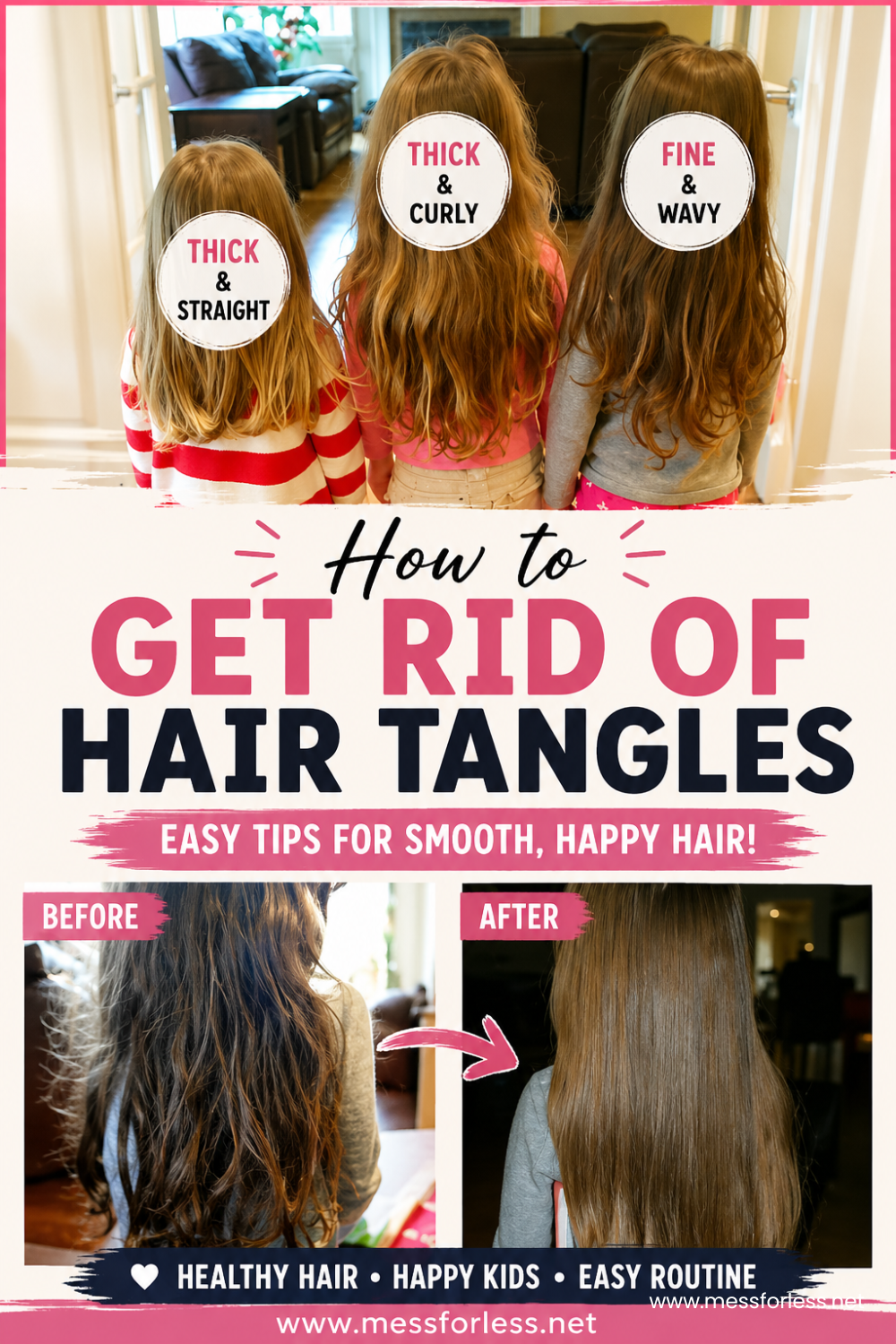
I have three girls with three totally different hair types, and what surprised me most was this - the hair that looks "easy" isn't always the hair that tangles the least. I found that fine and wavy hair gave us the toughest mornings.
But I'm here to tell you all the hair secrets I have learned over the years, including:
- How to tell what kind of tangle you're dealing with
- The pain-free brushing technique that matters more than the product
- What I use for light tangles vs tough knots (budget and splurge options)
- A simple DIY detangler spray for everyday use
Jump to:
- The 30-Second Tangle Check So You Don't Make It Worse
- The Pain-Free Detangling Technique That Matters More Than the Spray
- What Actually Helps With Tangles - And What I Use for Each Level
- The Brush Matters More Than You Think
- Hair Type Cheat Sheet
- Easy DIY Hair Detangler Spray
- Optional Tools I Use When We Need a Faster Morning
- The one habit that prevents morning tangles
- FAQs
Make Hair Brushing Easier!
Want a simple, printable guide to help with tangles, knots, morning routines, and bedtime hair care? Grab my No-Tears Hair Detangling Guide Printable Set from my shop for easy step-by-step tips you can use again and again.
Get It in My ShopThe 30-Second Tangle Check So You Don't Make It Worse
Before you spray anything, do this quick check. It helps you choose the right approach and prevents hair breakage.
Light tangles
These are the everyday snags where the brush catches but releases quickly.
Knots
You'll feel one or two tight spots that don't want to budge.
Mats (rare, but possible)
Hair feels fused together (often at the nape). If it's matted, slow down, as force doesn't make the process any faster, it just makes it painful.
If you're dealing with a true mat, work in tiny sections with your fingers first and take breaks. The goal is separation, not yanking.
The Pain-Free Detangling Technique That Matters More Than the Spray
This is the brushing method that stopped the complaints in our house.
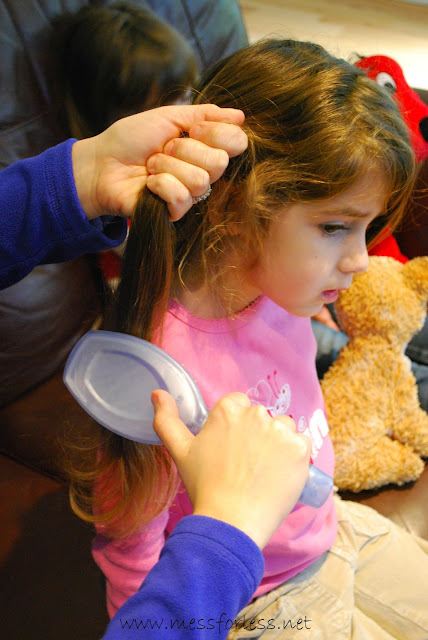
- Start with fingers, not a brush - Use your fingertips to gently separate the area around the tangle first.
- Hold the hair close to the scalp - Grab a section and hold it firmly near the roots so the tugging doesn't pull on their head. This one change will make a big difference.
- Work from the bottom-up - Begin brushing the last inch or two of the hair and gradually move upward. If you start at the top, you push the tangles into a tighter knot.
- If the brush gets stuck, stop and redo - Add a tiny bit more slip (detangler or conditioner mix), use fingers again, then continue.
What Actually Helps With Tangles - And What I Use for Each Level
I bought way too many things over the years trying to solve our tangle problem. Some worked, some didn't, and a few just collected dust. Now I think about it in levels of tangles:
For everyday tangles:
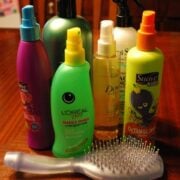
A basic kids detangler or a light DIY spray (recipe below) is usually enough, especially for hair that only tangles a little overnight.
For stubborn knots:
Some hair tangles "re-form" even after you brush, especially in hair that is fine and wavy. That's when a stronger detangler makes a real difference.
A quick note if your detangler looks "weird":
Some concentrated detanglers spray out thick or gloppy. That's normal. Rub it between your fingers and smooth it into the section you're detangling. When it's working, you'll feel the brush start to glide instead of snag.
The Brush Matters More Than You Think
The kinds of brushes that tend to work best:
- Flexible bristles that bend instead of ripping through knots
- A cushioned brush that reduces pulling
- A wide-tooth comb for curly hair (great when hair is damp)
Hair Type Cheat Sheet
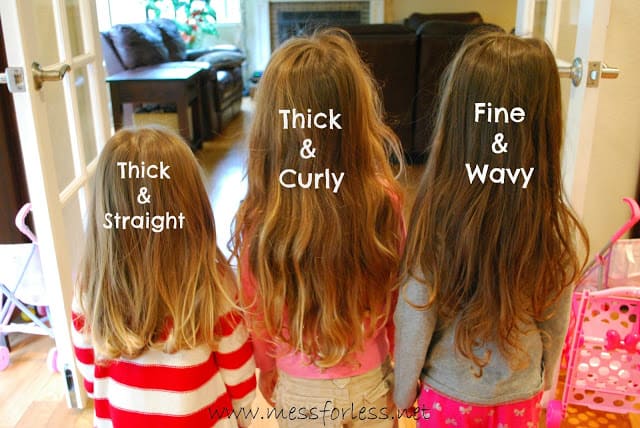
Thick and straight
Usually light tangles. A basic detangler (store-bought or DIY) and a gentle brush are enough. Focus on nightly brushing to prevent morning knots.
Thick and curly
Curly hair can look intimidating, but it responds really well when you detangle with patience and a dentangler. Use fingers first, then a wide-tooth comb or flexible brush. If you're fighting it daily, use the same approach I use for fine + wavy hair.
Fine and wavy
This is the "it tangles again instantly" hair type in my experience. Use a stronger detangler for stubborn spots and be strict about bottom-up brushing. Just be careful not to overload on product since too much can weigh hair down and make it feel dirty faster.
Easy DIY Hair Detangler Spray
If your child doesn't get severe knots, you can make a simple detangler spray that works well for day-to-day tangles.
- Use it on damp hair (after bath or after misting with water)
- Shake before each use
- Apply in sections where the brush usually catches (ends, nape, behind ears)
Tip from trial and error: if hair starts to feel heavy or coated, use less conditioner in your mix next time or rinse the hair well before styling.
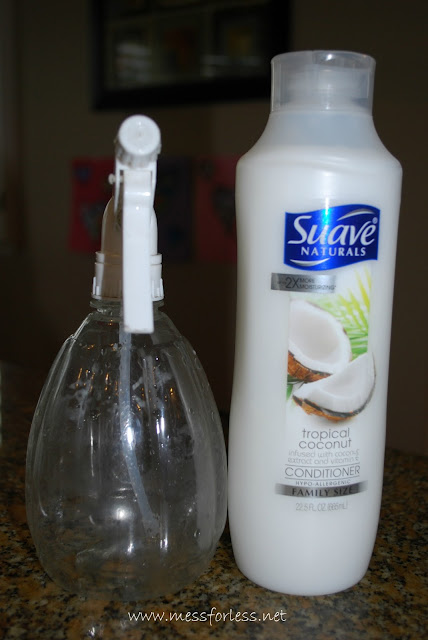
What you need:
- 1 cup water
- 1-2 tablespoons conditioner
How to make it:
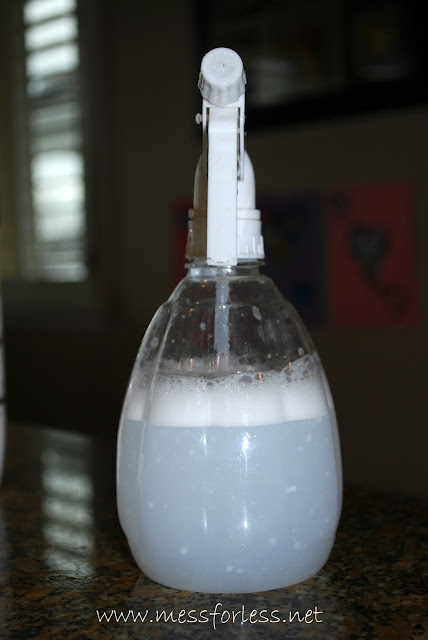
- Pour water into a spray bottle
- Add conditioner
- Shake well before each use
How to use:
Lightly spray onto tangled hair before brushing. Start from the ends and work your way up for best results.
Optional Tools I Use When We Need a Faster Morning
Here's what I reach for depending on the kind of tangle day we're having:
For everyday tangles (quick and budget-friendly)
- A basic kids detangler spray for light morning snarls
- A gentle, flexible brush that bends instead of ripping through snags
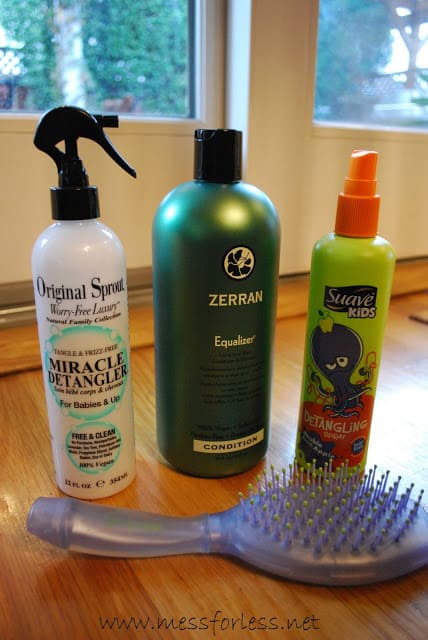
For stubborn knots (when the brush keeps stalling)
- A stronger detangler for the spots that won't release (especially at the nape and behind the ears)
- A wide-tooth comb if you're working through thicker sections slowly
For long hair or tangle-prone sleepers
- Soft hair ties or scrunchies (less breakage than tight elastics)
- A simple bedtime braid routine to reduce morning friction
If you're adding any tool to your routine, I'd start with the brush first. The right brush fixes more "tangle problems" than most sprays.
The one habit that prevents morning tangles
Brush their hair at night before bed. It doesn't prevent all tangles (kids sleep like tornadoes), but it prevents the kind that take 10 minutes and cause tears.
If you only change one thing, change that.
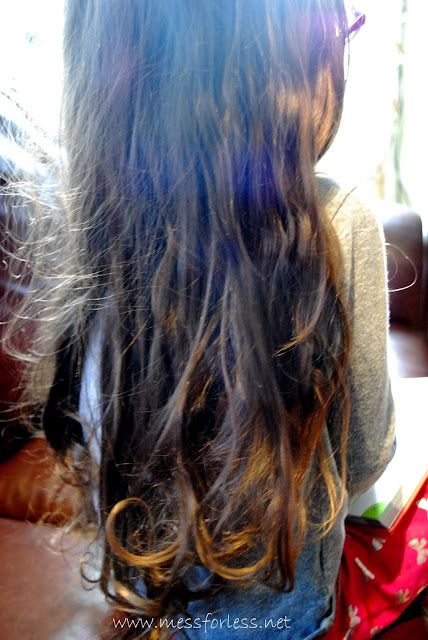
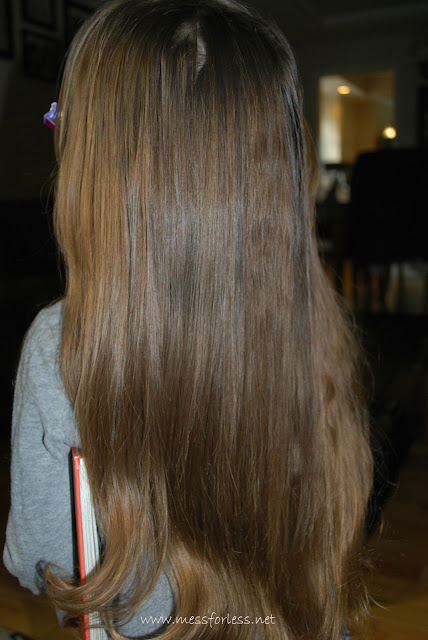
Here are some before and after photos using my hair detangling technique:
FAQs
Many kids do best with damp hair and some slip. If soaking-wet brushing causes snapping or breakage, towel-dry first and detangle gently in sections.
What if detangler makes hair feel weighed down?
Use less product, keep it on the ends, and save heavier detanglers for tough knots only. If your DIY mix feels heavy, reduce the conditioner next time.
Friction + dryness + fine strands. Jackets, car seats, and bedtime create friction. Night brushing plus a loose braid or ponytail can reduce tangles a lot.




Laurel says
Is it ok I read this for my hair?? Thank you!
[email protected] says
Thanks for these great ideas! My oldest has fine, straight hair, and tons of tangles! Pinning!
Rose says
What a great resource for parents! I had long hair for years and years as a child. It took a long time to find products that worked for me. I'm glad that you addresses proper brushes in this post because that is such an important component. Personally I like Paul Mitchell's Detangler Conditioner better than any other conditioner or detangler I've ever tried. It's a little pricy, but a big bottle will last you a long time.
Anonymous says
I have extremely tangly, thick, wavy hair. You should try the tangle teaser hair brush. I got it on amazon for 10 bucks. I thought it would be a gimmick but it really does work on wet or dry hair. It makes my hair feel silky and it only takes me a few seconds to brush my hair now!
Miss Courtney says
Great post. I've got fine and wavy hair and so does my son. A couple of months ago, I cut his hair myself to get rid of the tangles. My hair still tangles all the time. We've been using Redkin Anti-snap (leave-in) on wet hair and the Suave detangler on dry hair. I only brush his hair when it's wet with a comb. When it's dry (and sprayed) I use a boar bristle brush, so it will lie flat. I'm going to re-read your post right now for MY benefit.
Mel says
Thank you for this! My oldest has fine wavy hair, and is also tender-headed. She likes it long, but brushing it drives me crazy.
Brenda says
Thanks for sharing! My youngest daughter has fine and wavy hair and I agree it tangles SO MUCH and SO EASILY!! It's crazy! After conditioner & detangling spray I will take my time trying to be as gentle as possible getting the tangles out, but there are still many "ouch!"s and even a few lit'l tears involved in this routine. 🙁 This post was helpful! 😉 From one mama to another, THANK YOU!! <3
Brenda
ChattingOverChocolate.blogspot.com
K Coake says
Great tips! We have the fine hair here in our house and it is just as you say. Brush it, move and it is tangled again. I will have to try that product. I have a new link party I would love for you to share this at: http://www.realcoake.blogspot.com/2013/02/real-family-fun-1.html
Thanks,
KC
Anonymous says
Heading out to buy that brush and either a spray bottle to make my own or maybe just go straight for the Miracle product. Thank you! I was getting ready to cut my daughter's beautifully long hair but I think this may just be the better solution.
And while I'm at the store, I'm grabbing a Satin pillowcase per Grace's recommendation!
The Kirby Family says
Try a boar bristle brush. They have some at Target that are pretty reasonable. My oldest has lots of fine hair and it was looking sort of frizzy and was hard to comb through. My stylist uses the same brush on her daughter who has thick wavy hair. We are Original Sprout users...have been using the shampoo and leave-in since my oldest was about 1.